



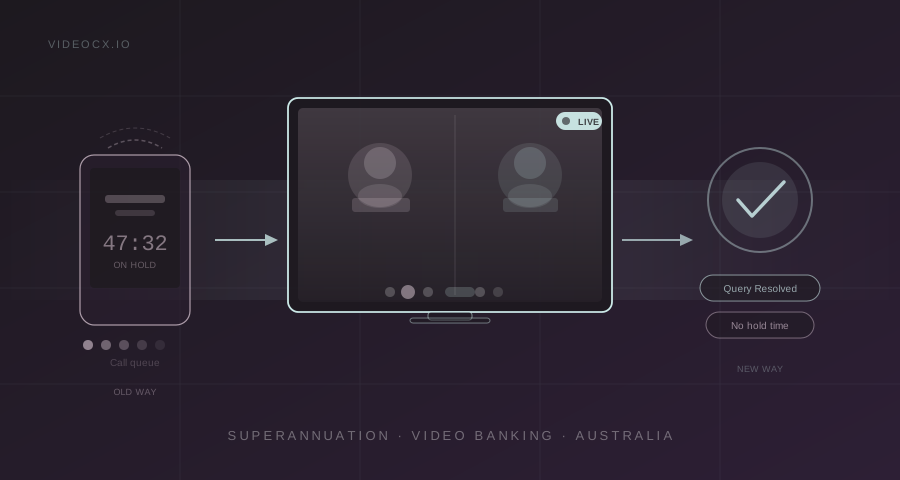
Superannuation is one of the most personal financial topics Australians deal with. When someone calls their fund about a withdrawal, they are rarely just asking a procedural question. They want reassurance. They want clarity. They want someone who understands their situation and can walk them through what happens next.
The problem is that most super funds are not built to give people that experience at scale.
Call centres are under pressure. Wait times stretch. Staff are stretched thin. Members who have built their retirement savings over decades are left on hold, transferred between departments, or told to wait for a callback. That is a poor outcome for the member, and it is a costly, unsustainable one for the fund.
Video changes that equation. Not by replacing humans, but by putting the right human in front of the member at the right moment, verified, compliant, and ready to help.
The Real Problem With Withdrawal Queries
Withdrawal queries are not simple. There are different types of withdrawals under Australian superannuation law, each with its own conditions, documentation requirements, and compliance obligations. Early access under compassionate grounds, transition to retirement income streams, full account balance on retirement, temporary residents claiming departing Australia superannuation payments. Each one has a different process and a different risk profile for the fund.
On top of the technical complexity, there is the emotional layer. A member calling to withdraw because they are facing a medical crisis, a mortgage default, or a difficult retirement transition is not in a calm, analytical headspace. They need clarity and they need it from a person, not a recorded message or a PDF.
That is the gap traditional call centres struggle to fill. Volume is high, staff are often reading from scripts, and the channel itself (voice-only, no document sharing, no visual verification) makes complex conversations harder than they need to be.
Why Video Works Better for These Conversations
Video is not a novelty for financial services. It has been used by banks, insurers, and advisers across the world because it replicates what a branch conversation does, without requiring the member to travel or the fund to build physical infrastructure.
For withdrawal queries specifically, video adds three things a phone call cannot provide.
First, verification. A member claiming early access due to financial hardship or a medical condition needs to be the right person. Confirming identity over the phone relies on knowledge-based authentication that is increasingly vulnerable. On a video call, a staff member can sight documents in real time, confirm facial identity, and complete the process in a single session. Video KYC makes this a structured, auditable workflow rather than an ad-hoc visual check.
Second, document handling. When a member needs to submit supporting evidence, such as a medical certificate or a statutory declaration, a video session allows staff to see and assess those documents without the member needing to scan and upload through a portal they may not be familiar with. This reduces friction and the back-and-forth that usually stretches a simple case across multiple days.
Third, trust. People make better decisions and feel more confident in those decisions when they can see who they are talking to. A member finalising their retirement drawdown strategy is making one of the most significant financial decisions of their life. A face-to-face conversation, even a digital one, changes the quality of that interaction.
Deflecting Call Volume Without Deflecting Members
One of the concerns funds have when considering video is whether it increases complexity or cost. The opposite tends to be true when it is deployed thoughtfully.
The key is routing. Not every withdrawal query needs a video consultation. Many can be resolved through self-service, digital forms, or a short chat interaction. But when a query is complex, emotionally charged, or requires verification, routing that member into a video session rather than a phone queue changes the outcome substantially.
A well-designed customer journey and routing framework can identify these triggers automatically. A member who has landed on the hardship withdrawal page three times in a week and started a form but not submitted it is sending a signal. Proactively offering a video consultation at that moment, rather than waiting for them to call, can convert a frustrated, churning member into one who completes their application with confidence.
This matters because incomplete applications and abandoned queries are not free. They come back as repeat contacts, complaints, and in some cases, regulatory issues if a member makes a decision without adequate guidance.
Compliance Is Easier When the Conversation Is on Camera
Superannuation funds operate under ASIC and APRA oversight. Withdrawal processes carry compliance obligations around member education, appropriate advice boundaries, and record keeping. Phone calls can be recorded, but they are harder to document, review, and audit than structured video sessions.
Video banking platforms built for financial services are designed around these requirements. Sessions are recorded with consent, transcripts are generated, and the interaction is logged against the member record. If a member later disputes what they were told, or if a regulator wants to review how the fund handled a compassionate access claim, the evidence is there.
There is also the question of verification at the advice boundary. Super funds are not financial advisers in the traditional sense, but they do provide general advice. When that general advice is given face-to-face over video, with a verified member, it is easier to demonstrate that the right disclosures were made and the right questions were asked.
What a Video-Enabled Withdrawal Process Actually Looks Like
In practice, a fund that has integrated video into its member services workflow handles a withdrawal query something like this.
A member logs into the portal or contacts the fund via digital channel. They indicate they want to explore a withdrawal or are having trouble completing an application. Instead of going into a call queue, they are offered a video consultation, either immediate if an agent is available, or scheduled for a time that suits them.
When the session begins, the agent sees the member’s account details, their contact history, and any partially completed applications. They can share their screen to walk the member through the form. They can sight and assess supporting documents. They can confirm identity visually and through ID document verification within the same session.
At the end of the call, the fund has a complete record of the interaction, the member has submitted their application, and both parties have a clear understanding of what happens next and when.
Compare that to the current experience at most funds: the member calls, waits, gets transferred, is asked to email documents, receives an automated acknowledgement, and then waits again. That process might take a week. The video-enabled version can happen in forty-five minutes.
The Branch Without the Branch
Australian superannuation funds do not generally maintain retail branch networks the way banks do. The economics do not support it across a geographically dispersed membership base. But that has always left a gap for members who want a face-to-face conversation rather than a phone call or a digital form.
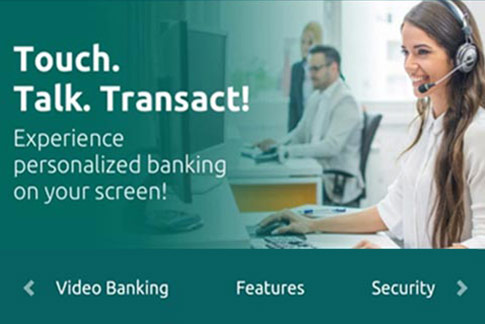
Video branch capability fills that gap without the capital cost. A member in rural Queensland who wants to talk through their retirement drawdown options gets the same quality of interaction as a member in inner Sydney. The conversation is human, it is documented, and it happens in a compliant environment. Video branch and video banking infrastructure is purpose-built for exactly this use case.
This is particularly relevant for the cohort of members approaching or entering retirement. These are often people who are less comfortable with purely digital self-service and who are making high-stakes decisions they want to get right. Giving them a face-to-face option, without requiring them to travel, is a meaningful service improvement.
Measuring Whether It Is Working
One of the reasons video gets adopted slowly in financial services is that the outcomes can seem hard to quantify. The reality is that the right infrastructure makes measurement straightforward.
Funds using video for member interactions can track the proportion of withdrawal queries resolved in a single interaction, average handle time compared to voice, member satisfaction scores per channel, and drop-off rates at key stages of the withdrawal process. Dashboards and reporting tools designed for video banking operations make these metrics visible in real time, not as a quarterly retrospective.
Over time, this data supports a clearer picture of where video adds the most value, which types of queries benefit most, which agent behaviours correlate with positive outcomes, and where the process still has friction that needs to be removed.
A Practical Starting Point
Funds considering video do not need to rebuild their entire member service infrastructure to start. The most effective implementations tend to begin with a specific, high-value query type, prove the model, and then expand.
Withdrawal queries are a natural first focus. They are high in emotional stakes, complex enough to genuinely benefit from face-to-face interaction, and common enough across the membership base to generate meaningful volume. The compliance and verification use cases are concrete and the value is demonstrable within a short pilot period.
Starting narrow and learning fast is better than waiting for the perfect, fully integrated solution. Members who are struggling with withdrawal processes are not waiting. They are calling competitors, lodging complaints, or making uninformed decisions.
Where Do You Want Members to Go When They Need Answers?
Call centres are not going away, and they should not. But they should not be the default channel for every complex, emotionally significant member interaction. Video consultation, when it is integrated properly into member journeys, routed intelligently, and built on compliant infrastructure, takes pressure off call centres while improving the experience for the members who need it most.
For Australian superannuation funds, withdrawal queries are one of the clearest places to start. The problem is well-defined, the member impact is significant, and the technology to address it exists today.
The question is not whether video belongs in superannuation member services. The question is how quickly funds move to implement it before their members find a fund that already has.