




Australia’s customer-owned banking sector has something that CommBank, Westpac, NAB, and ANZ simply cannot manufacture at scale: a genuine relationship with the people they serve.
Credit unions, mutual banks, and building societies were built from the ground up to put members first. There are no shareholders to answer to. Profits go back into better rates, lower fees, and improved services. The people walking into your branch are not customers in the traditional sense. They are part-owners. That is a fundamentally different kind of institution, and most Australians who discover it wonder why they did not switch sooner.
And yet, here is the uncomfortable reality that most leaders in the customer-owned banking sector already sense but rarely say out loud.
The Big Four are winning the digital experience battle. Not because their products are better. Not because their rates are lower. But because their apps are smoother, their onboarding is faster, and for a generation of Australians who manage everything from their phone, digital experience has become inseparable from trust.
Australia’s big four banks control around 90% of the country’s financial assets, and their share of the market has held firm not just because of their size, but because of their willingness to invest heavily in digital infrastructure. An estimated 60% of financial institutions are still relying on legacy systems and claim to be in the early stages of their digital transformation initiatives, and the customer-owned sector is not immune to that challenge.
The good news is that closing this gap does not require a billion-dollar technology overhaul. It requires a smarter strategy. And for institutions built on human connection, video is the most powerful and cost-effective tool available.
The Digital Gap Is Real, and It Is Growing
In 2024, 73% of Australians said they expect to complete any banking task via their mobile app. Not most tasks. Any task. That is the baseline expectation for the next generation of members that customer-owned banks need to attract and retain.
The sector is feeling this pressure acutely. KPMG’s 2025 mutual banking review found that higher member expectations, digital disruption, and an evolving regulatory and compliance landscape are among the most significant pressures facing mutual banks, credit unions, and building societies. Meanwhile, total assets in the sector rose 6.2% to $165.8 billion in 2025, which shows genuine resilience. But resilience and growth are two different things, and growth requires winning the next generation of members before the Big Four do.
The demographic challenge is just as pressing. The median age of credit union members is 53, highlighting the urgent need to modernise offerings and appeal to younger, tech-savvy generations to ensure long-term growth and relevance. Younger Australians are not anti-credit union. They simply have not had a reason compelling enough to switch from an app they already know how to use.
Here is the strategic insight that changes the frame: the Big Four’s digital advantage is primarily about convenience and speed. It is not about connection. And connection is exactly what customer-owned banks are built for. The challenge is delivering that connection through digital channels, not just through branches.
Video is how you do that.
What Video Banking Actually Means for Member-Owned Institutions
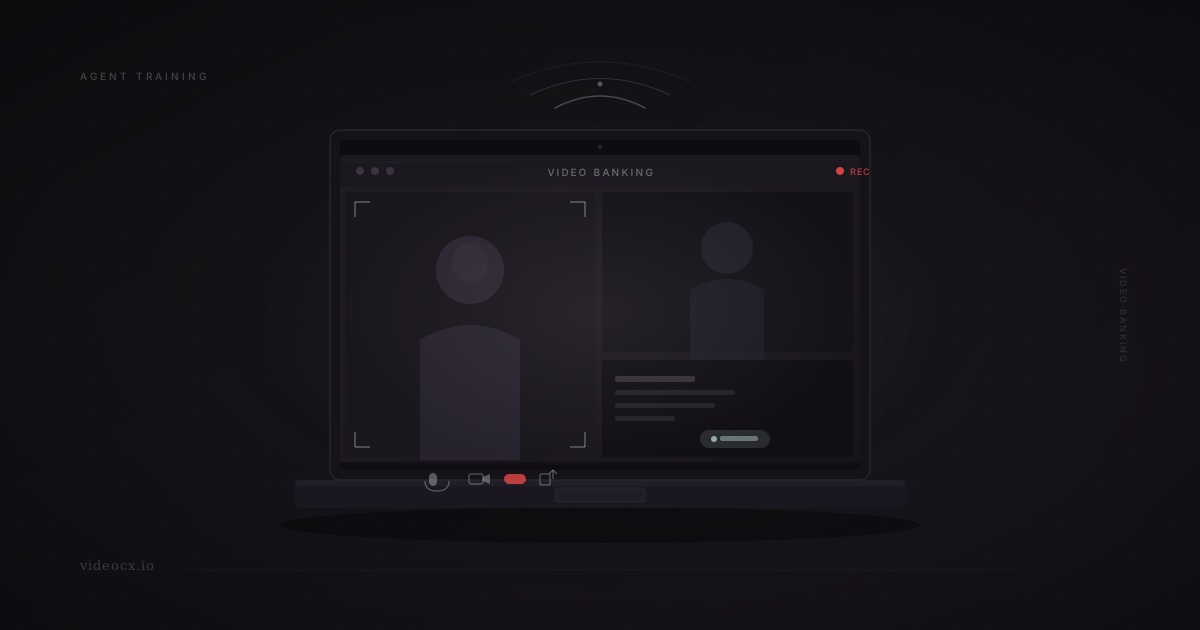
Video banking is not simply a video call added to your website. When it is built properly into the member journey, it is a secure, fully documented, compliant interaction channel that handles everything from new member onboarding and identity verification through to loan consultations and insurance servicing.
Think about what happens when a member walks into one of your branches. They are greeted by name. A staff member sits across from them, explains complex products in plain language, listens to what they actually need, and gives advice that reflects their specific situation. That interaction builds trust in a way that no chatbot, FAQ page, or automated decision engine ever will.
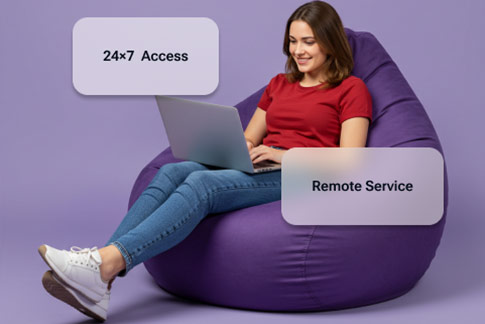
Video recreates that interaction digitally. It brings your branch to wherever your member is, whether that is a kitchen table in regional Queensland, a lunch break in Melbourne’s CBD, or a home office in suburban Perth.
Video banking services facilitate direct communication between customers and banking representatives, allowing for more personalised service. This immediacy and interaction fosters better relationships between customers and banks, leading to increased loyalty and retention.
For the Big Four, rolling out video at scale means training thousands of staff and maintaining consistency across enormous customer volumes. For a mutual bank or credit union with 50,000 to 400,000 members, it is a genuinely achievable competitive advantage that larger institutions struggle to replicate with the same warmth and personalisation.
Five Places Where Video Closes the Digital Gap
1. New Member Onboarding
This is where first impressions are formed and where customer-owned banks lose prospective members before they even get started.
Complex, drawn-out digital onboarding is one of the most common reasons people abandon the process and fall back on the bank they already have. Research from the US market, which mirrors the Australian experience closely, found that opening an account at a member-owned institution can require twice as many steps and significantly longer completion times compared to the best-in-class digital banks.
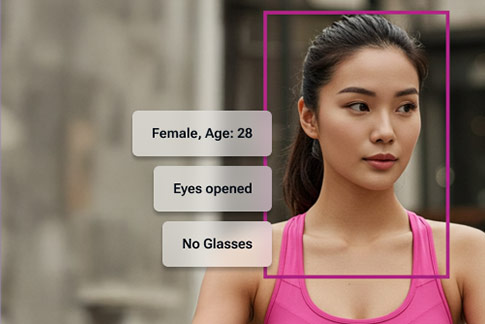
A video-assisted onboarding session solves this without requiring a complete rebuild of your core banking platform. A member services officer guides the new member through the process live, answers questions in real time, catches errors before they become blockers, and makes the whole experience feel personal rather than bureaucratic.
This is the most natural entry point for video branch and video banking technology, and for most institutions it delivers a measurable improvement in completion rates almost immediately. More importantly, it sets the tone for the entire member relationship. You are not just another financial institution. You are the one that actually showed up.
2. Remote Identity Verification
For customer-owned banks serving members in regional and remote Australia, or for institutions looking to grow their membership beyond their traditional geographic footprint, getting identity verification right remotely is one of the biggest operational challenges to growth.
Many institutions are still asking new members to visit a branch with physical documents. That works well for people who live five minutes away. For members in rural New South Wales, northern Queensland, or Western Australia’s regional centres, it is a genuine barrier.
V-CIP technology solves this directly. Your compliance team verifies a member’s identity through a live, secure, recorded video session. The member holds up their government-issued ID. Your officer confirms it in real time. The entire session is documented, giving you a clear audit trail that satisfies your obligations under APRA’s prudential standards and the Anti-Money Laundering and Counter-Terrorism Financing Act 2006.
It is faster than a branch visit, more reliable than fully automated document scanning, and it removes a real geographic barrier without cutting corners on compliance. For customer-owned banks committed to serving Australians that the Big Four underserve, this is genuinely transformative.
3. Loan Consultations and Credit Conversations
A mortgage application. A small business loan. A personal loan during a difficult stretch. These are among the most significant financial conversations an Australian will have in their lifetime, and they deserve more than a form and an automated decision engine.
Research consistently shows that the use of physical channels tends to grow as customers need more complex advice, with only 39% of consumers obtaining mortgages online. For complex financial products, having access to a human support agent is still necessary.
This is a direct competitive opening for customer-owned banks. The Big Four’s digital mortgage processes are fast. They are also impersonal. A member who gets a video call from a real lending officer who has reviewed their application, answers their questions, and explains their options clearly is having an experience that CommBank’s app cannot replicate.
A live video consultation built into your loan application journey lets your lending team walk a member through their submission in real time, reducing abandoned applications, catching incomplete documentation early, and building the kind of confidence that turns a tentative enquiry into a completed loan.
Credit assessment and verification via video gives your lending officers the tools to conduct these conversations in a single, documented session that feels personal for the member and is fully auditable for your compliance team. That combination of warmth and rigour is the hallmark of the customer-owned banking model.
4. Complex Member Support
The Big Four have enormous contact centres. They also, increasingly, have AI-powered chat systems that handle high volumes of routine queries around the clock. A smaller institution cannot match that infrastructure through phone support alone.
But here is the insight that reframes the whole challenge: your members are not calling you to check their balance. They are calling when something has gone wrong, when they are confused about a product change, or when they need to make a financial decision that genuinely matters to them. Those moments do not need volume capacity. They need a human face and a person who actually listens.
According to Forrester’s January 2025 insights, digital banking is entering another transformative phase driven by demands for human-like, integrated, and empowering experiences. Customer-owned banks are naturally positioned to deliver exactly that. You just need a channel that lets you do it efficiently, at scale, without members needing to drive to a branch.
Video support for complex queries, reviewing a mortgage redraw, understanding a term deposit rollover, navigating a financial hardship arrangement, gives your team the ability to handle these conversations with the full warmth and clarity of an in-person interaction, delivered wherever the member happens to be.
5. Insurance and Ancillary Product Servicing
Many credit unions and mutual banks in Australia offer insurance products, either directly or through associated providers. Home and contents cover. Vehicle insurance. Life and income protection. These products are relevant, competitively priced, and genuinely valuable to your members. They are also, in most cases, massively undersold, because the experience of discovering and discussing them is either buried in a branch visit or reduced to a PDF attached to a welcome email.
Video changes the delivery model for ancillary products entirely. A member who has just settled a home loan can be connected, through a seamless video handoff, to a specialist who walks them through their coverage options in a face-to-face conversation. The interaction feels like advice, not a sales pitch. Trust is reinforced rather than tested.
Insurance policy servicing through video also means existing members can review, update, or query their coverage without a branch visit. For members in regional Australia especially, this is not a convenience feature. It is often the only practical option for getting proper personal advice.
This is a real revenue opportunity sitting largely uncaptured in the customer-owned banking sector right now.
Why This Is a Window That Will Not Stay Open
The gap between the best and the rest in member-owned institution innovation is widening as top performers focus on digital services and strategic partnerships. The credit unions and mutual banks moving on video banking right now are creating a differentiation that will be significantly harder to replicate once the rest of the sector catches up.
KPMG found almost 80% of mutual bank leaders are confident about their three-year growth prospects. That confidence is warranted in terms of the sector’s fundamentals. But confidence and investment are not the same thing, and the institutions that are acting on digital experience right now are the ones that will hold the loyalty of the next generation of members.
The member-owned model has never been more relevant to Australian consumers. Cost-of-living pressures, mortgage stress, and a growing distrust of shareholder-driven institutions are all creating genuine appetite for an alternative. Customer-owned banks fill gaps left by traditional banks, whether that is looking after isolated, regional, or disadvantaged communities. That mission resonates. But it needs a digital experience worthy of it.
A Practical Starting Point
You do not need to deploy video across every touchpoint immediately. The institutions seeing the best results start with one high-impact use case, prove the value internally, and build from there.
A sequenced approach that works well for Australian mutual banks and credit unions of almost any size:
Start with onboarding. The ROI is direct, measurable, and easy to present to your board. Track completion rates before and after. The difference is usually significant enough to justify the next phase of investment without a lengthy business case process.
Add video ident for remote membership. Once your team is comfortable on video, this removes the geographic barrier to membership growth and opens up segments your institution has not been able to serve efficiently before.
Layer in loan consultation video. Focus on the products in your lending portfolio with the highest digital drop-off rates. A single video touchpoint mid-application can meaningfully improve completions and member satisfaction scores.
Expand to complex support and insurance servicing. Once video is embedded in your acquisition and lending journeys, use it for retention and cross-sell moments where the lifetime value impact becomes significant.
The technology investment required is considerably smaller than most leaders expect. The more important investment is in giving your team simple, reliable workflows that let them show up well on screen. And for people who already know how to build genuine relationships with members, that transition is far easier than it might sound.
The Bottom Line
The Big Four have the engineering teams, the marketing budgets, and the brand recognition. What they do not have is the ability to make 4.6 million Australians feel like individuals rather than account numbers.
That is the customer-owned banking sector’s deepest competitive advantage. Video is the tool that makes it available digitally, on demand, for every member regardless of where they live or what time they need help.
Digitally mature financial institutions experience up to 2x the annual revenue growth compared to their less tech-savvy counterparts. Digital maturity does not mean chasing every fintech trend. It means meeting your members where they are, with the kind of service they genuinely cannot get from a Big Four app.
Your members already trust you. Video makes sure they never have a reason to wonder whether a bigger bank might serve them better.