






By 2027, generative AI will not replace human agents in video banking. It will redefine them.
Video banking has already moved core financial interactions from physical branches to structured digital environments. Platforms giving services such as AI-enabled video banking, video KYC, and video based credit verification have digitised onboarding, compliance checks, and customer support. The next shift is not about moving interactions online. It is about intelligence layered into those interactions.
Generative AI introduces contextual understanding, real-time assistance, and workflow automation at a depth that changes how human agents operate inside video banking ecosystems.
The human role does not disappear. It evolves upward.
The Current Role of Human Agents in Video Banking
Today, human agents operating inside video banking environments perform a mix of operational and judgment-based tasks:
- Identity verification during Video KYC
• Document validation
• Credit discussions and Video PD
• Explaining regulatory disclosures
• Handling edge-case customer journeys
• Escalation management
Even in AI-enabled video systems, much of the cognitive load still sits with the human agent. They must navigate tools, interpret policy rules, assess behavioural signals, and maintain compliance accuracy.
This model is scalable. But it is not optimised.
What Generative AI Changes Fundamentally
Generative AI introduces three major structural shifts inside video banking workflows:
- Real-time contextual intelligence
- Cognitive load redistribution
- Predictive workflow orchestration
These shifts reshape what the human agent actually does during a video interaction.
1. From Information Retrieval to Decision Oversight
In 2027, generative AI will handle:
- Real-time summarisation of customer profiles
• Automatic extraction of key data points from documents
• Policy lookups during live calls
• Intelligent compliance prompts
• Live risk flagging
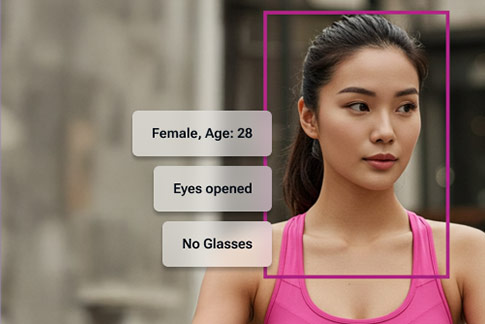
During a video KYC session, instead of the agent manually cross-checking data across systems, AI-based video analysis can pre-validate identity signals, flag mismatches, and surface decision cues before the agent acts.
The agent becomes a decision validator rather than a data retriever.
This significantly reduces cognitive fatigue and operational errors.
2. Assisted Intelligence During Live Video Calls
Generative AI embedded inside an AI-enabled video banking environment will:
- Suggest next best questions
• Surface relevant scripts dynamically
• Detect hesitation or confusion patterns
• Recommend escalation when risk signals appear
Instead of agents following static SOP documents, AI will dynamically adjust conversational guidance based on customer behaviour, transaction type, and regulatory context.
This elevates agent performance consistency across locations and experience levels.
3. Intelligent Routing Before the Call Even Starts
One of the most underestimated transformations will occur before a human even joins the session.
Generative AI will analyse:
- Customer intent
• Application complexity
• Risk score
• Product type
• Past interaction history
And route the customer to the most appropriate agent skill group automatically.
Human agents will increasingly specialise instead of acting as generalists. A complex mortgage credit verification session should not be routed to a basic onboarding agent.
AI-led journey orchestration ensures skill alignment.
4. Credit Verification and Risk Conversations Become Intelligence-Augmented
In video-based credit discussions and Personal Discussion workflows, generative AI can:
- Pre-summarise financial profiles
• Highlight inconsistencies in applicant statements
• Surface regulatory compliance reminders
• Generate structured call summaries automatically
This transforms the Video PD interaction from manual documentation to structured intelligence capture.
The agent focuses on qualitative judgment. AI handles structured data interpretation.
5. Video KYC Moves Toward AI-First, Human-Verified
By 2027, video KYC processes will likely shift toward:
AI pre-validation
Human confirmation
Automated audit trail generation
Generative AI will assist in:
- Real-time transcript creation
• Identity anomaly detection
• Behavioural pattern analysis
• Automated regulatory documentation
The human agent becomes the compliance checkpoint, not the compliance processor.
The Emerging Human Agent Profile in 2027
The future video banking agent will not be measured on:
- Speed of data entry
• Script adherence
• Repetition accuracy
They will be measured on:
- Judgment quality
• Risk sensitivity
• Customer empathy
• Escalation precision
• Decision validation
Operational repetition will be handled by AI.
Human value will concentrate around judgment and trust.
The Rise of the “AI Supervisor” Role
Another structural shift will be internal.
Banks will require:
- AI monitoring specialists
• Prompt optimisation analysts
• Bias detection reviewers
• Audit supervisors for generative systems
Senior agents may transition into AI governance roles, reviewing AI-assisted decisions and ensuring regulatory compliance integrity.
This is particularly critical in highly regulated markets like Australia, where accountability frameworks require traceable decision logic.
Performance Standardisation Across Distributed Teams
Generative AI dramatically reduces variability between high-performing and average agents.
With live AI assistance:
- Script quality becomes consistent
• Compliance prompts are automated
• Missed verification steps reduce
• Documentation errors decline
This enables banks to scale video banking operations nationally without performance dilution.
For Australian financial institutions operating across urban and regional centres, this becomes strategically important.
Risks and Boundaries
Generative AI will not operate unchecked.
Three key governance areas will define successful adoption:
- Explainability
- Data privacy
- Human override authority
Human agents must retain final decision authority in high-risk financial workflows.
AI enhances. It does not authorise independently.
Banks that remove human oversight entirely will face regulatory and trust backlash.
Final Perspective
The future of video banking is not automation replacing people.
It is intelligence amplifying human capability.
By 2027, high-performing video banking environments will not be defined by how many calls they process.
They will be defined by how intelligently humans and AI collaborate within structured digital journeys.
The banks that redesign human roles early, invest in AI-native video platforms, and embed governance into every workflow will lead this transition.
The others will operate with higher cost, higher inconsistency, and slower decision cycles.
The shift has already begun.
The question is not whether generative AI will reshape video banking.
It is how quickly institutions adapt their human workforce to operate inside an intelligence-driven environment.